
Home/Blog/FWC Derelict Vessel Guidelines Explained
Legal GuideWhat actually makes a boat "derelict" in Florida, how to report one, and what your options are if there's a derelict vessel on your property.
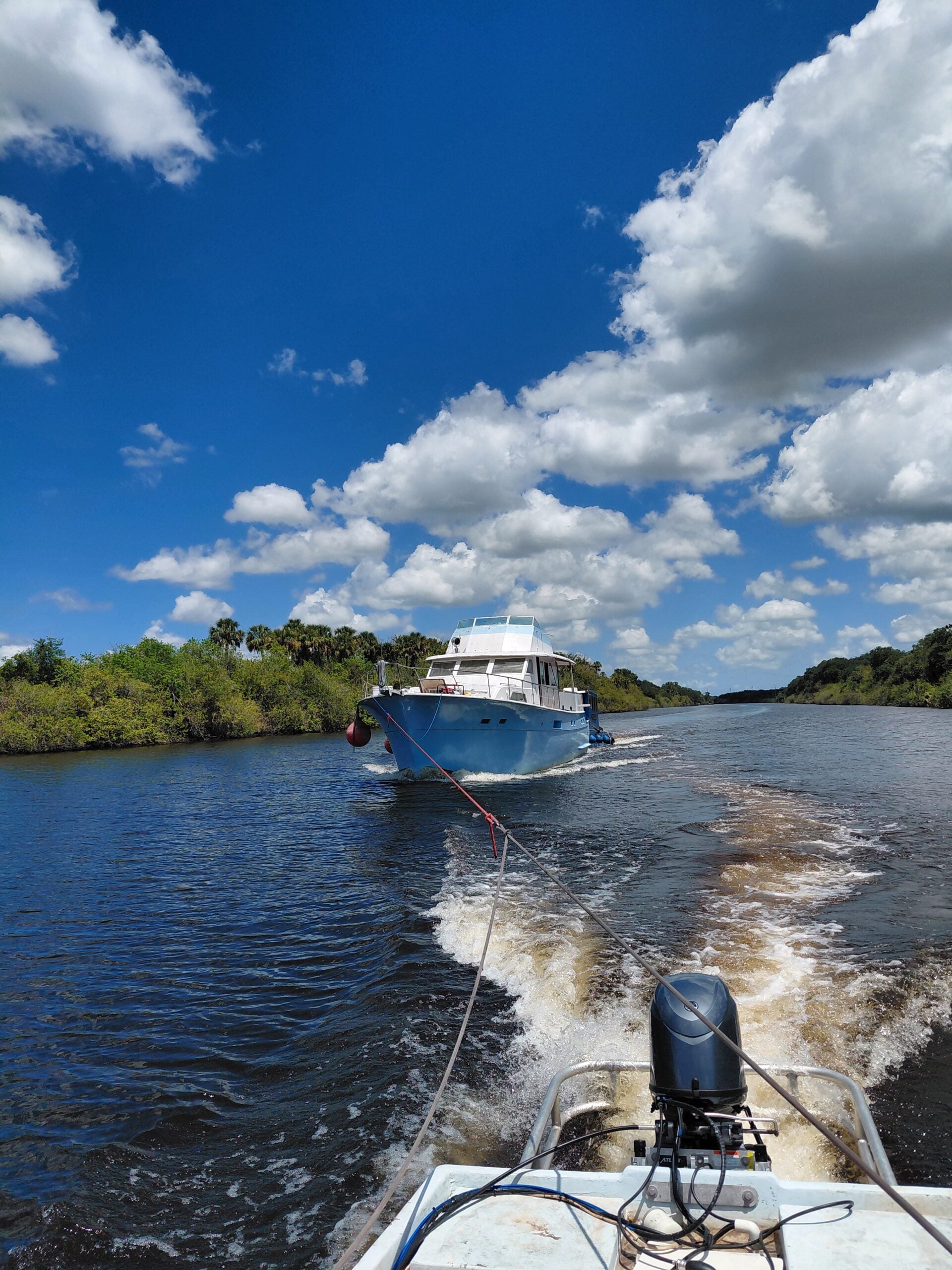
A derelict vessel left on private property in Florida.
If you've got a wrecked, abandoned, or falling-apart boat on your property, at your marina, or sitting in a canal near your dock, you've probably run into the term "derelict vessel" — usually attached to a Florida Fish and Wildlife Conservation Commission (FWC) notice, a neighbor's complaint, or just your own gut sense that the thing needs to go. Here's what that term actually means, and what your options are.
In plain language, FWC generally treats a boat as derelict when it falls into one of a few categories:
Sunken or sinking, aground without the ability to free itself, or left over after an accident, storm, or fire.
Stripped of major components, significantly degraded, or effectively discarded by its owner.
Missing or non-functional in at least two of three areas: steering, propulsion, or hull integrity.
Docked, grounded, or beached on someone else's property, or at a port, without the owner's consent.
That's a simplified summary, not legal advice — and not a substitute for FWC's own definitions, which go into more technical detail. If you want the full, current wording, FWC's Derelict and At-Risk Vessels page is the source to check.
If the boat is on public waters and you want it on FWC's radar, reporting it is a separate process from hiring a removal company — FWC investigates, and depending on the situation, may pursue enforcement or removal through its own channels. Here's where to start:
If it's on your property, you may not need to go through FWC at all — we can often remove it directly.
We're not FWC, and we don't file reports, permits, or liens on anyone's behalf. What we do is handle the physical side of getting a derelict vessel gone — in a few different situations:
No. We're an independently owned and operated private marine services company, with no affiliation, endorsement, or official role within FWC or any government agency.
Dealing with a deteriorating or abandoned vessel proactively is generally a good idea, but we can't advise on your specific legal exposure — that's a question for FWC or an attorney. What we can do is handle the physical removal.
No. We're not attorneys and don't file reports, permits, or liens on a client's behalf. We'd recommend working with FWC directly or your legal counsel on that side, and we'll take care of the removal itself.
We can still help with removal — just let us know the situation when you reach out so we understand what's already in progress.

Kenneth is a Florida native with a family marine legacy dating back to 1847 and a lifetime of hands-on experience on the state's waterways. Read his full story →
Tell us about the boat, its condition, and its location. We'll review the details and discuss the next steps with you directly.